The field of photonics has actually observed impressive improvements, specifically in the development of numerous modulators that play vital functions in various optical applications. Amongst these, fiber acousto-optic modulators (AOMs) and their lots of variations, such as space AOMs and free-space AOMs, attract attention as a result of their versatility and efficiency. An acousto-optic modulator utilizes sound waves to control the strength, frequency, or phase of light passing with a medium, providing a reliable approach for pulse modulation. With the growing demand for high-resolution and accuracy applications, these devices have come to be indispensable in areas like telecommunications, clinical imaging, and scientific study.
These lasers produce light with an extremely narrow spectral width, making them suitable for various intricate applications, consisting of meaningful communication systems and high-resolution spectroscopy. This combination shows the fad in the direction of boosted compactness and efficacy in optical systems without sacrificing efficiency.
The utility of fiber optic delay lines can not be overstated, especially in designing innovative optical systems that require specific timing and synchronization. These delay lines harness the intrinsic buildings of fiber optics to manage light signals properly, allowing engineers and researchers to explore high-speed information transmission or detailed timing experiments with marginal loss of fidelity. The electric optical fiber delay line offers as a central part in this context, promoting the manipulation of light signals to match certain needs.
Discover Optical delay line the most up to date developments in photonics, focusing on the essential role of fiber acousto-optic modulators in improving laser applications, telecommunications, and precision optical systems for varied industries.
Modulators are vital in laser systems, playing a vital role in changing continuous wave outcomes right into pulse layouts. Acousto-optic Q-switch modulators serve this exact purpose, making it possible for quick modulation of laser outputs, which leads to high-peak power pulses. This capability is crucial in applications such as material handling, where accuracy and speed are vital. The option between an AOM and an electro-optic modulator (EOM) frequently emerges in conversations surrounding modulation techniques. While both offer the primary feature of pulse modulation, an AOM typically displays greater optical power handling capacities and faster changing times contrasted to EOMs, making AOMs particularly useful in high-energy laser applications.
The difference in between acousto-optic switches and modulators is an essential aspect of understanding how these devices function in various situations. In contrast, a modulator readjusts the light’s residential properties, directly impacting the beam of light’s attributes.
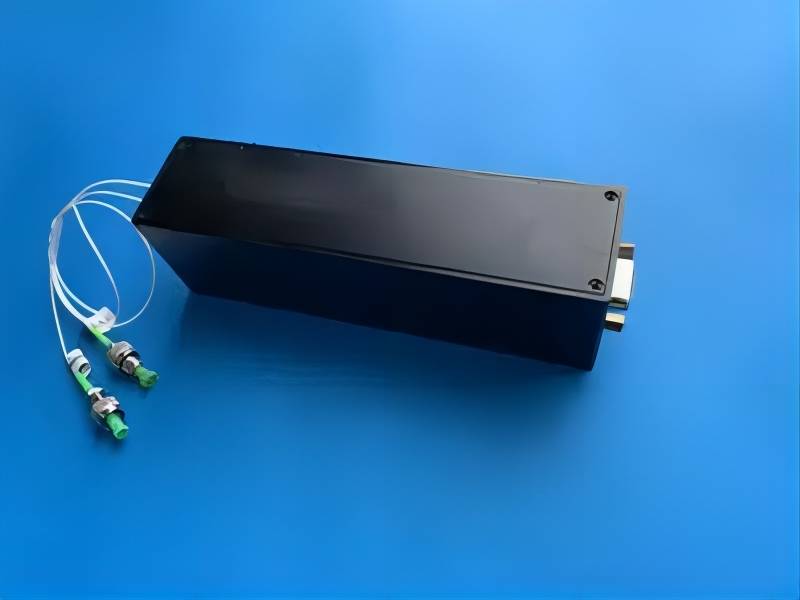
Acousto-optic devices have significantly acquired grip in the market, driven by the rising demand for sophisticated optical technologies. The acousto-optic modulator market is witnessing considerable development due to applications in telecoms, army systems, and commercial manufacturing.
Narrow linewidth fiber lasers exhibit stable emission with very little spooky spread, providing to applications in fiber-optic communications and picking up innovations. Combining these fibers with advanced modulators makes it possible for researchers to explore new frontiers in optical interaction systems.
Acoustic optical deflectors contribute to the flexibility of optical systems, providing a way to manipulate light dynamically and efficiently by using acoustic waves as the controlling system. Such devices can be found in different applications, from laser scanning systems to advanced imaging strategies. By utilizing the concepts of acousto-optics, these deflectors aid in accomplishing specific and quick modifications in the light beam’s trajectory without the need for complex mechanical components.
In checking out the sorts of pulse modulation, one understands the complexities and range intrinsic in the area. Pulse modulation techniques, such as pulse-width modulation (PWM) and pulse-position modulation (PPM), permit manipulation of light based on exhaust to produce varying signal types. These methods promote innovations in electronic devices and photonics, from managing laser outputs to enhancing the performance of fiber optic systems.
Additional factor to consider of optical passive components reveals their vital duty in enhancing system dependability. Their contribution to total system performance is essential, mainly when incorporated with modulators and other dynamic optical devices.
The growing concentrate on space applications emphasizes the demand for durable and dependable optical systems that can work properly in severe problems. Space acousto-optic modulators, in certain, suit the distinct requirements of space objectives, where elements such as radiation exposure and temperature changes can substantially impact capability. The development of space-grade acousto-optic devices ensures that interaction and information collection continue to be uninterrupted in the rough atmospheres of space.
Acousto-optic Q-switching represents among the most reliable methods of creating high-energy pulses, vital for applications ranging from laser marking to clinical procedures. The modulation capabilities inherent in AOMs enable them to adapt to differing requirements, optimizing pulse duration and energy outcome. As a result, they offer an innovative path to raise laser applications throughout diverse areas.
As we dig better into the future of photonics, it becomes progressively clear that technology in laser modulators and acousto-optic technologies is essential. The improvements in modulator drivers enhance the effectiveness with which EOMs and aoms run, allowing quicker and extra reliable efficiency. The crossover in between advancements in modulation and the increasing demand for higher bandwidth and reduced latency in interaction systems recommends a future abundant with chances for strengthened optical interactions.
Understanding the fundamental technicians that underpin acoustic optical modulators will bring about remarkable layout and performance renovations as study remains to flourish. The exploration of new products, assimilations, and techniques in areas like micro-nano fabrication will likely produce devices with even finer control and prolonged functional lifetimes. These developments not just assure boosted capability for existing systems but invite entirely new applications within arising modern technologies in quantum computing, robotics, and advanced manufacturing.
In recap, the domain name of acousto-optic modulators and relevant fiber-optic modern technologies symbolizes fast progress and intricacy, working as fundamental aspects within numerous modern-day optical applications. With the growing demand for accuracy and high performance in various markets, the advancement of acousto-optic devices, such as fiber AOMs, proceeds to evolve, adapting to new obstacles and chances. As scientists and designers push the boundaries of advancement, these devices will continue to be central to forming the future of optical communication, laser applications, and beyond, proclaiming a new period of technical advancement.